Artificial Intelligence (AI) Enables Dyslexic Learners to Become Career Ready
Students with dyslexia often face significant learning barriers, especially in classrooms centered on reading and standardized testing. Educational technology, particularly artificial intelligence (AI), is creating new ways to expand access and help dyslexic learners become career-ready.
Dyslexia can make reading, spelling, and writing more difficult, affecting comprehension, confidence, and academic success. Accommodation such as extra test time helps, but they are often insufficient. Students also need tutoring, accessible materials, and steady support from educators and families.
Reading gaps can limit future career opportunities. About 65% of at-risk students read below grade level, and 88% of students who are not proficient by the end of third grade never catch up. Early intervention is critical, but socioeconomic barriers can delay support. In the United States, about half of the prison population is dyslexic, and roughly 80% is functionally illiterate.
At a Virginia Peninsula Military Officers Association of America (VIPMOAA) meeting, Congressman Bobby Scott highlighted priorities from his work on the House Committee on Education and Labor: keeping at-risk students in school, strengthening early literacy, and developing job skills that support career readiness.
AI is making education more accessible and personalized for dyslexic, at-risk, and multilingual learners. Adaptive tools, speech recognition, and writing support can boost engagement, speed feedback, and help teachers monitor progress. Schools must still address privacy, access, bias, and overreliance, ensuring AI supports—not replaces—educators as they prepare students for school and work.
Competency-based learning lets students advance after demonstrating mastery, while targeted support gives others the time they need to succeed. Skilled trades provide stable career paths, and career and technical education (CTE) builds job skills through hands-on learning, apprenticeships, mentoring, and life-skills training. About 90% of CTE students graduate from high school, including many who were once at risk.
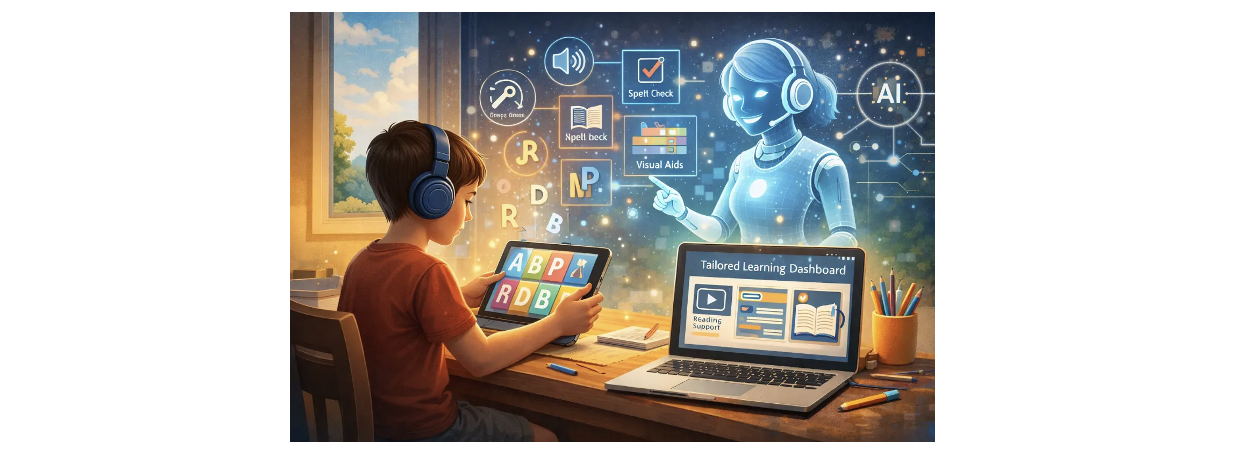
Because dyslexia affects each learner differently, support must be individualized. AI can simplify text, add audio and visuals, and provide real-time guidance that strengthens comprehension and confidence. Summaries, mind maps, and text-to-speech tools help students organize ideas, stay focused, and work more independently. Used well, these tools can reduce access gaps and make classrooms more inclusive.
In a fast-changing world, businesses need creative, unconventional thinkers to navigate digital disruption. The country needs innovators like Henry Ford, Steve Jobs, Thomas Jefferson, Thomas Edison, and Alexander Graham Bell, all of whom were or are believed to have been dyslexic. Andrew Jackson, the seventh U.S. president, was also dyslexic and is often quoted as saying, “It is a damn poor mind that can think of only one way to spell a word.”
Made By Dyslexia founder Kate Griggs says, “In the age of co-intelligence, dyslexic thinking pairs well with AI by reducing challenges and amplifying strengths.” In 2022, LinkedIn recognized it as a searchable skill, positioning it as a competitive advantage. Research from the World Economic Forum and Randstad Enterprise shows these abilities are now among the most in-demand workplace skills.The Reshoring Initiative is bringing manufacturing and services back home by lowering costs, improving quality, and strengthening supply chains. Dyslexic thinkers often excel at creative problem-solving, visual thinking, and fresh approaches to challenges. Together, reshoring and dyslexic thinking show the value of rethinking traditional practices, embracing diverse perspectives, and improving business strategy and productivity.
Advanced manufacturing and digital shipbuilding use automation, data analytics, AI, and 3D visualization to improve productivity and quality. These technologies also create technical jobs that often require only a high school diploma plus strong math and science skills. By providing visual guidance and simplifying complex tasks, 3D visualization helps workers learn faster. Microsoft Copilot and other AI tools can help dyslexic learners by offering text-to-speech, visuals, simplified wording, bullet points, adjustable fonts, and brainstorming support. While reading and writing may still be difficult, these tools make both tasks more accessible and engaging by letting students listen as they follow along, as Copilot does its job. Glenn Marshall, who has dyslexia, is president of the Virginia Peninsula Military Officers Association of America. He also volunteers with the Association for Manufacturing Excellence and Newport News Shipbuilding Career Pathways and is a member of the Reshoring Initiative. Contact him at marsh8279@aol.com. - - -